
finding confidence outdoors
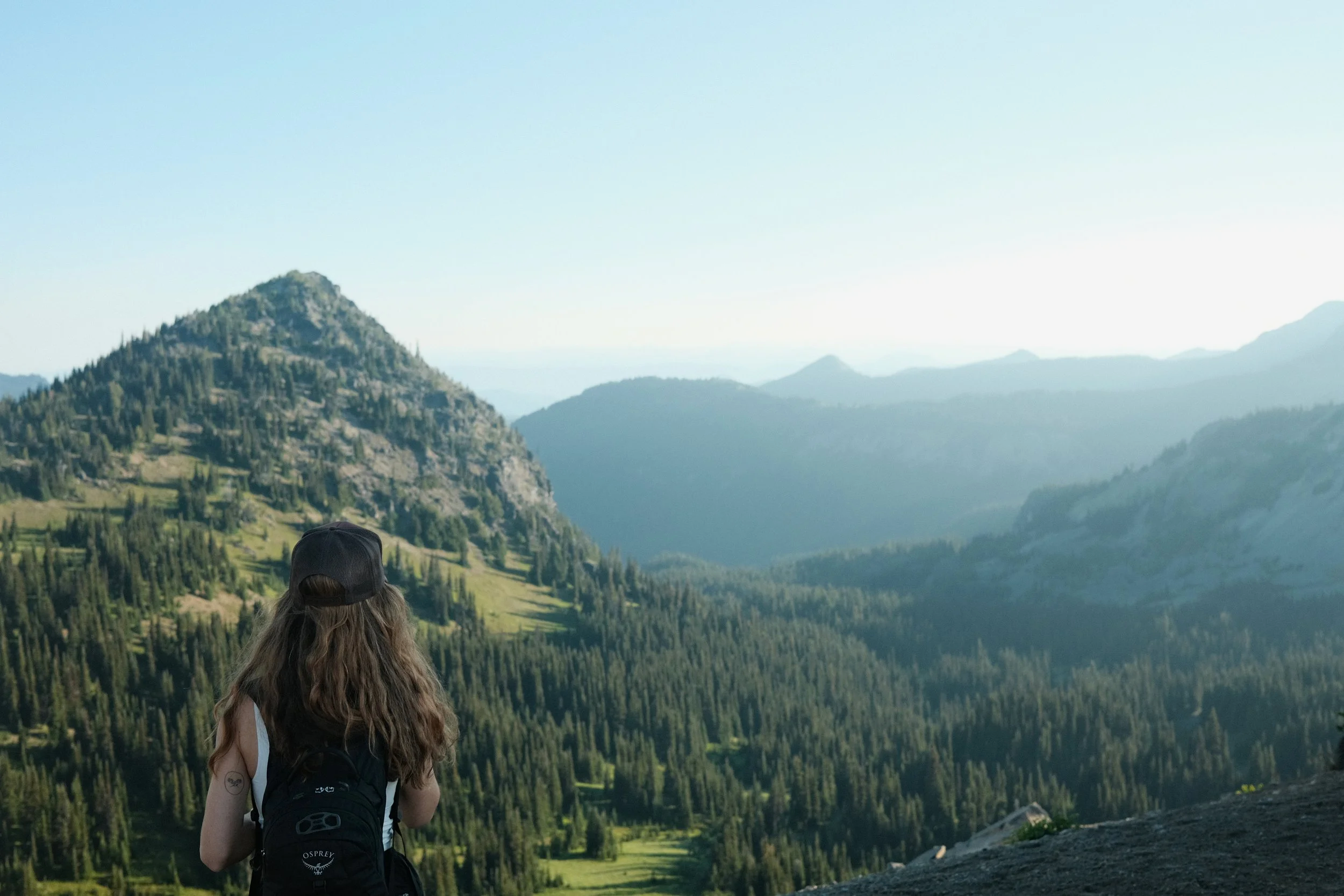
Mt. Rainier Nat’l Park, Sunrise, WA
no longer trying to justify my place outdoors
For a long time, I believed adventure was something you had to earn. That you needed to be tougher, stronger, more experienced - more like the version of an outdoor enthusiast I saw everywhere else. I wanted to explore, but I hesitated, unsure if I was cut out for it, or if I even deserved to be out there.
When I pictured an adventurist, the image rarely looked like me. It looked confident, athletic, tenacious - often male. And I quietly assumed that meant I was always going to be a step behind.
So I watched from the edges.
I told myself I needed to train more, learn more, toughen up before I could really claim a place outdoors. I worried about being too slow, about not having enough grit or endurance, about choosing easier hikes and trails. What I didn’t have language for then was imposter syndrome… and how deeply it shaped the way I moved through nature.
when explorer felt like a title I had to earn
I have a deep appreciation for people who do incredible things outdoors.
The endurance, skill, and mental strength required for long miles, big climbs, and extreme environments is beyond impressive. Pushing limits can be meaningful and big challenges can lead to immense growth.
But somewhere along the way, I believed that version of adventure became a sort of standard. I leaned into the belief that suggested that anything less than that didn’t count.
I internalized that without realizing it. I chose routes that looked impressive instead of ones that felt supportive. I pushed past moments when my body asked for rest. I wanted to prove that I could keep up - that I deserved to be there.
And slowly, the place I went to feel grounded started to feel like another space where I had to perform.
choosing challenge without obligation
What changed wasn’t my respect for growth. What changed was was my relationship to the process of growth.
I still believe in forward progression. In testing yourself, in choosing challenge when it feels intentional and aligned. But I stopped believing that maximum effort was the entry fee for belonging outdoors.
There’s a difference between pushing yourself because you’re curious and forcing yourself because you’re afraid of being exposed. One builds confidence. The other drains it.
Allowing ease to be part of the experience didn’t make me stagnant - it gave me the safety to grow in ways that were more sustainable.
redefining what adventure looks like
The outdoors stopped feeling intimidating when I stopped treating it like a test.
Adventurism doesn’t necessitate a certain body, pace, or high tolerance for discomfort. It can be challenging or leisurely. It can look like long miles, or short trails. Like pushing limits, or honoring them.
Exploration isn’t solely reserved for the fearless or the most experienced kind of person. It’s a shared space for anyone looking to connect with the natural world. Adventure can be accomplished at any pace or level - the only rules in place are the ones we set ourselves.
The moment I stopped trying to earn my place, nature stopped feeling like something I had to prove myself worthy of and started feeling like a place I could come home to again.
If you’re drawn to the outdoors, but feel reluctant to explore due to not fitting standards — this is your reminder:
You belong. The only permission you need to start exploring is your own.
