
how to explore lightly: simple ways to travel with less impact
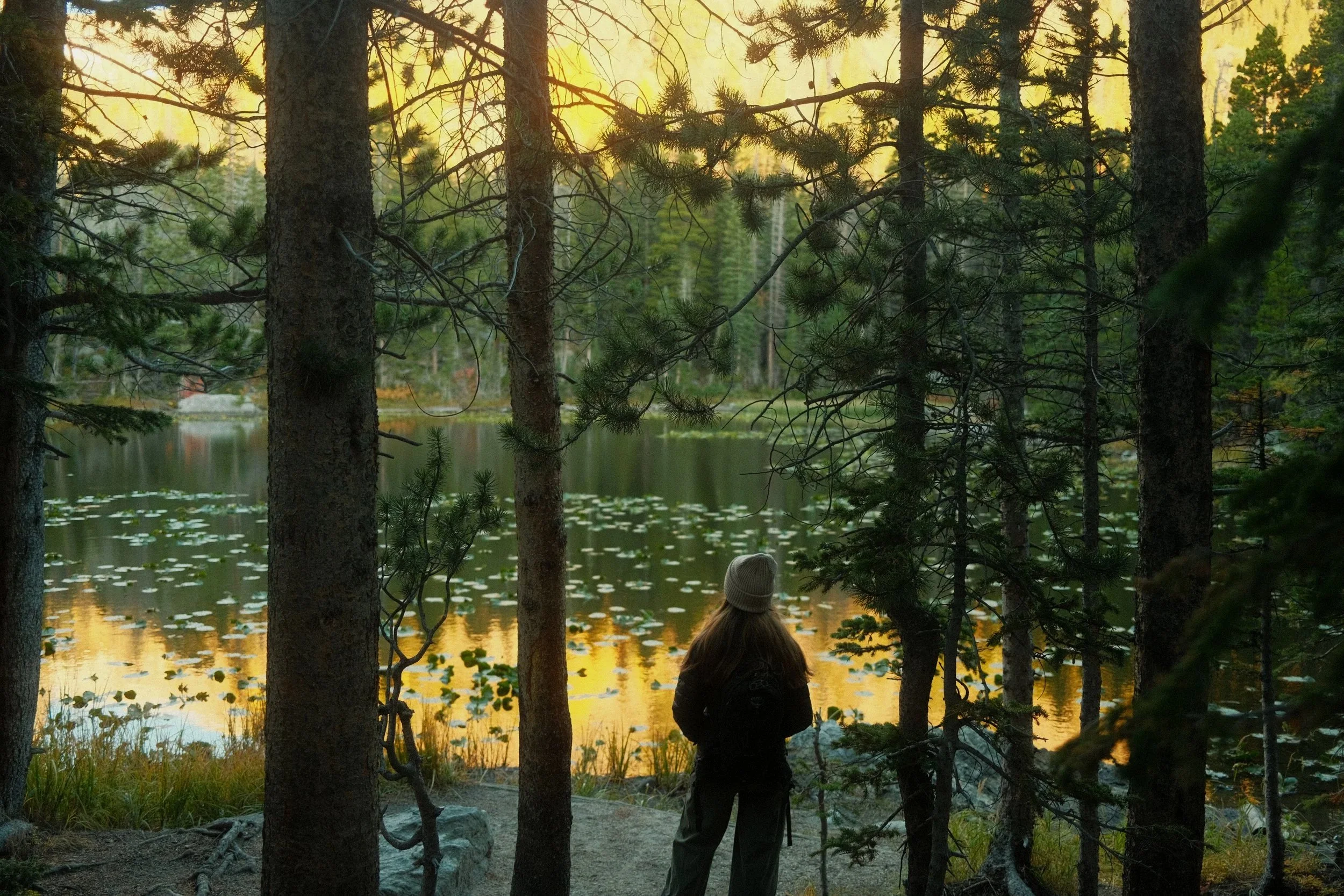
Nymph Lake, Rocky Mountain Nat’l Park, CO
a gentle guide for moving through nature with care
Exploring lightly isn’t about perfection - it’s about presence. It’s a softer way of moving through the world, one that asks us to slow down, pay attention, and make small choices that protect the places we love.
When we explore with more intention, we naturally leave a lighter footprint and often walk away feeling more rooted, more connected, and more aware.
↟ move with intention
Nature changes when we stop rushing. choosing one trail instead of three, lingering at an overlook a little longer, or letting silence stretch out between steps can turn an ordinary outing into something grounding and memorable.
Moving with intention softens our presence - on wildlife, on the land, and even on ourselves.
When we let the landscape set the pace, our impact becomes gentler, and we open ourselves up to the full experience.
↟ pack with purpose
Reduce your impact by bringing what’s essential, choosing items you’ll reuse, and avoiding things that create unnecessary waste.
A few gentle principles:
use reusables: water bottles, hydration packs, and small containers replace countless single-use plastics.
choose versatile layers: one well-loved jacket or a breathable base layer does more than multiple unnecessary pieces.
skip disposables: single-use wipes, utensils, and paper goods often become trash along trails.
carry what you’ll actually use: a thoughtful, lighter pack supports both you and the environment.
Packing with purpose isn’t about owning the ‘right’ gear - it’s about aligning your choices with the land you’re moving through.
↟ easy swaps that make a difference
Our impact isn’t defined by doing everything perfectly; it’s shaped by the small habits we build over time.
refillable gear instead of disposable packaging
nature-safe sunscreen + skincare that won’t wash into waterways
durable clothing you can repair instead of quickly replacing
a small trash or zip bag for litter you find along the way
cloths or pack towels instead of wipes that take years to break down
Small shifts, multiplied by many hikers, can become meaningful change.
↟ stay on the trail
A single step off-trail may seem harmless, but the ecosystems beyond the path are far more delicate than they appear.
Staying on trail:
• prevents erosion and widening paths
• protects wildlife habitat
• preserves fragile ground cover
• keeps ecosystems intact for the next season
Walk through muddy sections rather than around them, avoid cutting switchbacks, and allow the landscape to remain as you found it
↟ be gentle with wildlife
Wildlife encounters are often the most memorable moments… but they carry responsibility too.
Observe quietly and from a distance. Never feed animals or disrupt their natural behavior. Give them a respectful amount of space (even when you want the photo). If an animal changes its behavior because of your presence, take it as your cue to move along.
Gentle wildlife awareness keeps both animals and visitors safe - and preserves the natural rhythm of these places.
↟ quiet hiking for the win
Sound carries differently outdoors. lowering your voice, skipping speakers, and moving predictably preserve the soundscape for wildlife and for others seeking calm.
And often, the quieter we become, the more the landscape reveals.
↟ carry out a little extra
Packing out everything you bring in is foundational - but carrying out a few things you didn’t brings the experience full circle.
A wrapper on the trail, a bottle cap left behind, any bit of waste collected is doing something.
While small, this light stewardship is meaningful and may encourage others to do the same.
exploring lightly takes practice, not perfection
Every thoughtful choice protects these landscapes and the living things that depend on them. without proper care for these fragile ecosystems, we risk losing what makes them so sacred.
Exploring lightly is something we grow into - slowly, intentionally, and as imperfect people.
The more thoughtfully we move through nature, the more deeply it moves through us.
Leaving without a trace is the very least we can do.
